This is the deliberately excessive living specimen for the shared Atlas Article kit.[1] Its parts behave like passages from real Articles rather than objects arranged in a showroom: long arguments establish a reading rhythm, and each technical or visual form appears where the material naturally asks for it.[2]
Both kit pages compile this exact body beneath different headers. Every supported Article primitive is present, and the contents above are the index to them: notation and proof under the cascade paper, figures and captions under the consciousness essay, the complete gallery bank under the photographic one, then tables, code, and third-party media. Nothing here sits beside its own kind without prose between, because nothing does in real work.
Abstract
Within i.i.d. multiplicative cascades, a single axiom—the hierarchical symmetry, a linear contraction on incremental scaling exponents—is shown to be necessary and sufficient for the cascade multiplier to be log-Poisson. The result includes characterization, classification, and stability theorems, together with an unconditional propagation theorem transferring the bound to the multiplier distribution at the sharp rate . Beyond independence, the classification extends exactly at the level of asymptotic statistics and provably not at the level of laws. In the continuous category of exactly scale-invariant log-infinitely-divisible multifractal random measures, the symmetry selects the Barral–Mandelbrot compound Poisson cascade at the level of the scale-invariance generator.[3]
Key words and phrases. Multiplicative cascades, log-Poisson distribution, hierarchical symmetry, multifractal spectrum, moment determinacy, stability.
Hierarchical Symmetry Selects Log-Poisson Cascades
Multiplicative cascades model the successive fragmentation of a conserved quantity across scales and arise in fully developed turbulence, rainfall, finance, and other settings exhibiting intermittent, scale-invariant fluctuations. Their statistical properties are encoded in the scaling exponents of the structure functions . A central question follows: which probability distributions on the cascade multiplier are compatible with observed scaling laws?[4]
Kolmogorov proposed log-normal multipliers, leading to quadratic scaling exponents. Z.-S. She and Lévêque introduced a hierarchical symmetry for those exponents and derived a log-Poisson formula that has since shown excellent agreement with experimental data. Dubrulle independently identified the same form. Later work connected the symmetry to the Lévy–Khintchine representation, but the physical arguments did not supply a complete uniqueness proof.[5]
The paper formalizes the hierarchical symmetry as one axiom and proves four linked claims. First, the axiom uniquely determines the cascade multiplier within the class of all multipliers with finite lattice moments. Second, within the log-infinitely-divisible family it selects exactly the log-Poisson class. Third, an approximate symmetry forces the compactified Lévy measure near a Dirac mass with sharp constants. Fourth, this closeness propagates to the multiplier distribution at the exact rate .[6]
The method is compact. A change of variables sends the Lévy measure to , where a second-moment identity against the candidate atom decides classification and stability. The axiom also forces the multiplier to be essentially bounded, which yields moment determinacy directly and removes tail estimates from the propagation argument.[7]
A single structural law can be more informative than a long inventory of admissible examples.
Here the contraction does not merely suggest the log-Poisson family. It closes the field around it.
The extract that follows keeps the paper’s natural order: setup, axiom, algebraic form, and the moment argument. It is long enough to reveal whether prose, notation, theorem-like passages, headings, and displays share one continuous typographic system.
Setup
Let be a scale ratio. A multiplicative cascade generates a random positive measure on nested sets by
where are i.i.d. positive random variables with . The conservation of mean is a normalization convention; the structural proofs do not depend upon it.[8]
Let be the cascade observable at scale . Define the structure functions
where are the scaling exponents and . All moments of are assumed finite, so is finite for every . The relation identifies the single-step moment structure of the multiplier with the observable’s scaling.[9]
For a fixed integer , define the moment ratios
where are the incremental exponents at step .
The axiom
Axiom A1: Hierarchical Symmetry. There exist and such that for every ,
Because this recurrence is a contraction, it forces as ; write . Stating the axiom with a free constant matters in the approximate theory, where the distinction between the true limit and a fitted constant becomes quantitatively significant.[10]
The observable exponents determine the parameter set:
| Parameter | Determined by | Meaning |
|---|---|---|
| Contraction ratio in A1 | Coupling strength | |
| Linear drift | ||
| Concentration amplitude |
If , then and the cascade is monofractal. The multiplier is deterministic, and the nontrivial classification and stability statements begin only when .[11]
Exponent form and characterization
The recurrence determines the complete exponent family:
This statement is algebraic before it is probabilistic. At the lattice points , iteration and summation give the result without assuming a distribution for .[12]
Proof
Subtract the fixed point, iterate, and sum the step- increments:
Identifying and yields (1). The formula is proved on the lattice and then supplies the natural real-order extension.[13]
The matching multiplier is log-Poisson:
Its moments reproduce at every lattice order. What remains is to show that no second probability law can share those lattice moments.[14]
Boundedness and compact determination
Set . Then , and
(\mathbb{E}[V^m])^{1/m} tends to \(r^{\gamma k}\) as \(m\to\infty\).
The norms are nondecreasing and converge to the norm. Therefore is supported on and on . A probability law on a compact interval is uniquely determined by its integer moments: polynomials are uniformly dense in the continuous functions, so two laws with equal moments integrate every continuous function equally.[15]
Scope of the result
No infinite-divisibility assumption enters the characterization. A1 determines the log-Poisson law among all nonnegative multipliers with the stated lattice moments. The later Lévy–Khintchine theorem is anatomical rather than more unique: it explains how every rival log-infinitely-divisible subfamily fails the same structural law.[16]
The resulting singularity spectrum is[17]
At one boundary, ; at the other, .[18] The codimension is also the exponent governing the probability of a cascade path that repeatedly takes the maximal multiplier.[19]
Theorem 7 (Log-ID Classification)
Let be an i.i.d. multiplicative cascade with nontrivial intermittency (), whose generator is infinitely divisible with Lévy triplet . Then A1 holds with if and only if and for some , . That is:
A1 selects exactly the log-Poisson class from the full log-infinitely-divisible family.
No other log-ID cascade—log-normal, log-stable, or any intermediate—satisfies A1.
Proof.
Reverse direction. If with and , then with , and A1 holds by Proposition 5.
Forward direction. Assume A1 holds. We show and .
Step 1 (unsplit form). The cumulant generating function of is
finite for all since all moments of are finite. With and , define . Then
where is -integrable for each , being the difference of the two compensated Lévy–Khintchine integrands. No splitting of the integral is performed at this stage.
Step 1′ (sign inventory). For every :
- on : gives , and pointwise as ;
- on : , increasing to pointwise;
- on : , so , with pointwise as ;
- on : , with pointwise.
In particular , uniformly in .
Step 2 (). If then, by Step 1′,
so , contradicting the finite limit forced by A1. Hence . This eliminates all log-normal and mixed Gaussian-jump generators.
Step 3 (). If has mass on then, since there and pointwise, monotone convergence gives , while ; again and , a contradiction. Therefore . This eliminates all generators with positive jumps.
Step 3½ (integrability near ). We claim A1 forces . With and , apply Fatou's lemma on (integrand by Step 1′, pointwise limit ) and dominated convergence on (bounded by , finite mass):
If then and , contradicting A1. Hence , the compensator integral is finite, and only now may the integral be split:
The remaining integrand is dominated by and tends to pointwise, so by dominated convergence as ; thus and .
Step 4 ( is a single Dirac mass). A1 at gives, by Lemma 1(2), ; multiplying by ,
where (nontrivial intermittency and ). Substitute , mapping ; let be the pushforward of and set
Then (1) reads for all ; the case shows is a finite positive measure of total mass . Only are needed:
Since on and , we conclude and . Because on , the tilt is invertible:
Therefore with and . The generator is compound Poisson with deterministic jump size and rate : this is the log-Poisson distribution.
Remark (Alternative identification; minimality). The conclusion of Step 4 can also be reached from the full moment sequence: a finite signed measure on a compact interval is determined by its moments (Weierstrass approximation and the Riesz representation theorem), and realizes the moments (1). The second-moment argument given above is preferred because it (a) uses only of (1), so that A1 restricted to , together with Steps 2–3½, already pins the distribution; and (b) is exactly the computation that the stability theorem quantifies.
Remark (Which families die where). The exclusion mechanism stratifies. Gaussian components (Step 2), positive jumps (Step 3), and negative-support Lévy measures with —in particular totally skewed stable generators of index —all fail A1 by divergence: (Step 3½). All remaining log-ID generators have bounded incremental exponents but fail the geometric rigidity of Step 4: for a stable generator of index the moments decay like the power law , which cannot equal for any .
Corollary 8 (Principal cascade classes)
The log-ID cascade family is partitioned by A1:
| Class | Lévy data | A1 | Failure mode | Determinate |
|---|---|---|---|---|
| Log-Poisson | , , | Holds | — | Yes (bounded ) |
| Log-normal | Fails | (Step 2) | No | |
| Log-stable, | power-law | Fails | (Step 3½) | — |
| Log-stable, | power-law | Fails | non-geometric decay (Step 4) | Yes (bounded ) |
| General log-ID | any other | Fails | Step 3 or Step 4 | — |
Determinacy in this family tracks boundedness of the multiplier, equivalently boundedness of (Lemma 2(i)): every negative-support generator with finite has compactly supported , hence is moment-determinate. The operative dichotomy is bounded versus unbounded, with A1 strictly on the bounded side.
Cannot Read-Only
For a conscious being, to exist is to change, to change is to mature, to mature is to go on creating oneself endlessly.
— Henri Bergson, Creative Evolution (1907)
There is something our brains cannot do that every computer can. We cannot touch our memories, think our thoughts, or feel our feelings without those things transforming under our attention. Every time we touch our past, it changes its shape—and so do we. Put simply: we cannot read only. Every act of consciousness is an act of modification.[20]
I want you to imagine a dark room. Nothing in it but this: a pottery wheel, spinning fast. Wet clay on the wheel. And two hands pressing into the clay.
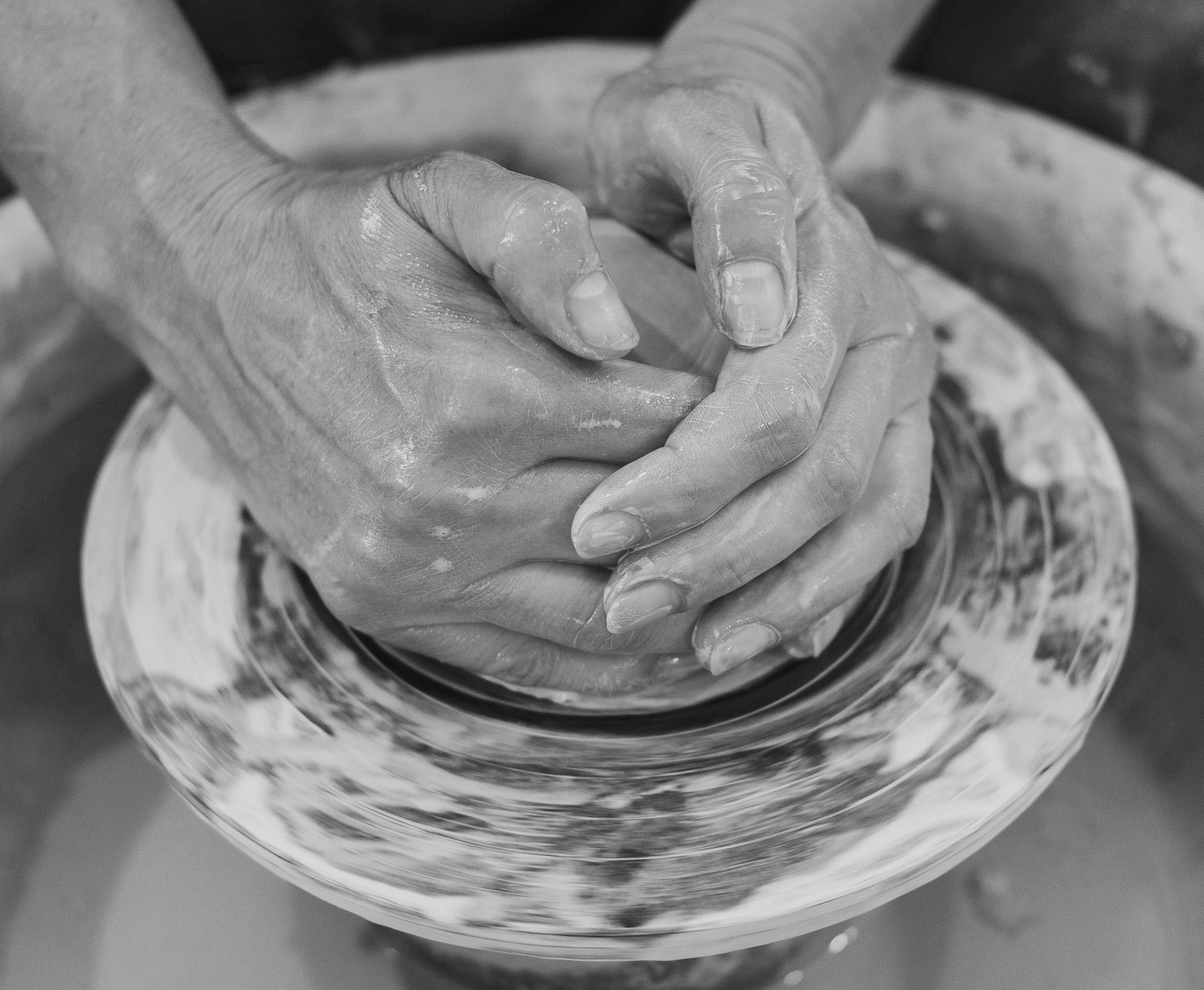
The wheel hums. Your hands move—they are always moving. Silt and slip run through the creases, lodge under your nails, pool in the lines of your palms. You feel the clay and the clay feels you. The spinning clay swallows every gesture and feeds it forward. The clay warms and yields under the pressure of your hands. Your hands are shaped by the clay. While the wheel is spinning, your hands and clay are one. The marks the fingers left a moment ago are already gone. The wheel has carried the clay past them and the hands have left new traces. Nothing holds still. Nothing repeats.[21]
The hands are you. The slippery clay is everything you have ever experienced: every memory, every face, every sentence you have read, including this one. And the wheel is time; it is spinning, the passage of it. When your time is up, the wheel stops spinning, the hands fall out of the frame, and the clay hardens. You, the conscious being, cease to be.[22]
Consciousness is the dark room. We may never see inside it clearly. But we are beginning to learn what it contains. Between 2022 and 2025, a pattern became visible across five research programs spanning machine learning, mathematics, neuroscience, and psychology. Not about what consciousness is, but about what it requires. The requirement they found is the wheel, the clay, and the hands: a system that cannot process information without being changed by it. A system that, no matter how you configure it, cannot access its own contents and come away the same.
They found a system that cannot read only.
Five Paths to the Same Conclusion
Something unusual is happening in consciousness research.
For decades, the field has been stuck in a war between two camps. The functionalists argue that consciousness depends on the pattern of information processing, not the material. Get the right computational architecture and consciousness follows, whether the substrate is neurons, silicon, or anything else. The biological naturalists argue that consciousness requires the specific causal powers of biological brains, though those powers have never been precisely identified. For forty years, this is where the argument has lived. Pattern versus stuff. Function versus substrate. Neither side has won.[23]
But between 2022 and 2025, something broke the stalemate. Not a new argument. A convergence—though none of the researchers involved have named it that. The pattern becomes visible only when you line them up.
Geoffrey Hinton: Mortal Computation (2022)
Geoffrey Hinton is, by most accounts, the single most important figure in the development of deep learning. In 2022, he introduced a concept he called mortal computation. The idea is simple and profound: in biological brains, the knowledge the system has learned and the hardware that stores it are inseparable. You cannot extract the knowledge and copy it to another machine, because the knowledge is encoded in the specific physical configuration of the neurons, the exact pattern of synaptic modifications accumulated over a lifetime of experience. When the brain dies, the knowledge dies. It is mortal.[24]
This is the opposite of how every digital computer works. On your laptop, software and hardware are cleanly separated. You can copy a file to a new machine and the information is identical. You can back up everything. The knowledge exists independently of the specific hardware that stores it. Nothing is mortal. Nothing has to be.
Hinton’s claim was that this separability—the thing that makes digital computers useful—is not a neutral engineering choice. It may be the thing that prevents digital systems from achieving what biological brains achieve. The inseparability of knowledge and hardware is not a bug of biological cognition. It may be the feature that matters most.[25]
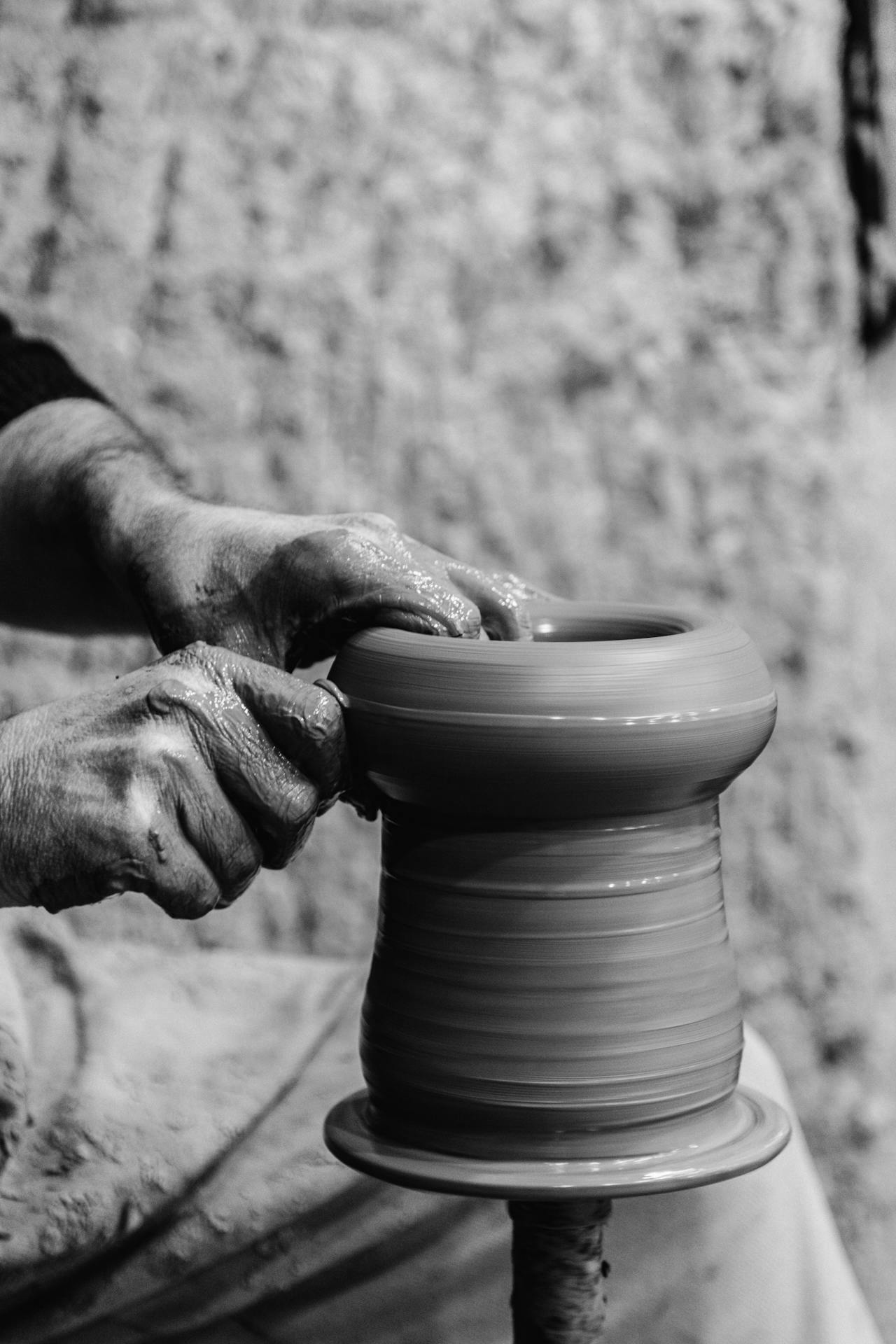
The clay and the hands cannot be separated. Try it. Peel the silt from the creases and say here is the knowledge and there is the knower. But the silt is warm from the hands. The grooves in the clay were cut by the fingers, and the calluses on the fingers were built by the clay. The knowledge is not stored in either one. It lives in the pressure between them, on a wheel that never stops turning.
Erik Hoel: The Disproof (2025)
In December 2025, the neuroscientist Erik Hoel published a paper with a title that did not hedge: “A Disproof of Large Language Model Consciousness.” Hoel’s argument was direct. Consciousness, he argued, requires continual learning: continuous modification of the system by its own processing. The system that finishes processing your sentence must be a different system than the one that started. Not different in its outputs. Different in itself. Changed. Altered. Marked by the encounter.[26]
Every current large language model fails this test. The weights are frozen during inference, the phase when a trained model processes new input. The model that begins your conversation is identical to the model that ends it. It processes your words and produces a response and remains the same afterward. The conversation leaves no trace on the system.
Hoel’s conclusion: this is not a limitation that will be fixed by scaling. It is an architectural feature. Frozen-weight systems are categorically precluded from consciousness.[27]
A system that can read only is one in which neither hands nor clay are present. The information came back and nothing was marked. That, Hoel argued, is the signature of the non-conscious.
Three More Paths
Hoel and Hinton were not alone. Three other research programs arrived at the same place.
In March 2024, the mathematician Johannes Kleiner proved formally that if computational functionalism is true, then consciousness must be mortal computation—not the kind that runs on standard digital hardware, but the substrate-inseparable kind. Functionalism, taken to its logical conclusion, leads somewhere its proponents do not expect: toward a kind of computation that digital hardware cannot provide.[28]
In December 2025, the neuroscientists Borjan Milinkovic and Jaan Aru identified three properties that distinguish biological from digital computation: hybrid dynamics, scale-inseparability, and metabolic grounding. Their conclusion: brains compute, but not in the way computers do. In biological computation, the algorithm is the substrate. You cannot separate them.
And beneath all of this lay a foundation established seventeen years earlier. In 2008, the Belgian psychologist Axel Cleeremans published the Radical Plasticity thesis: consciousness requires that the system continuously and plastically learn to re-describe its own activity to itself. A system that processes information without being changed by the processing cannot be conscious.
What They Agree On
Five research programs. Four fields. Different methods, different vocabularies, different levels of formalization. A shared conclusion:
- Hinton: knowledge and hardware must be inseparable.
- Kleiner: consciousness must be mortal computation.
- Hoel: the system must be continually learning, changed by its own processing in real time.
- Milinkovic and Aru: the algorithm is the substrate.
- Cleeremans: the system must continuously learn to re-describe its own activity to itself.
These are not identical claims. They differ in scope, method, and level of formalization. But they share a core: consciousness requires a system that cannot process information without being changed by it.[29]
The Hang
There is a meme about the “aristocratic elegance of the small-breasted woman” that has been going around for a few years now. It is funny, contains several half-kernels of truth, and has proven simplistic enough to achieve viral escape velocity. Unfortunately, as with any mass democratic consensus, it is woefully inadequate and caters primarily to those wishing to LARP as having good taste.[30]
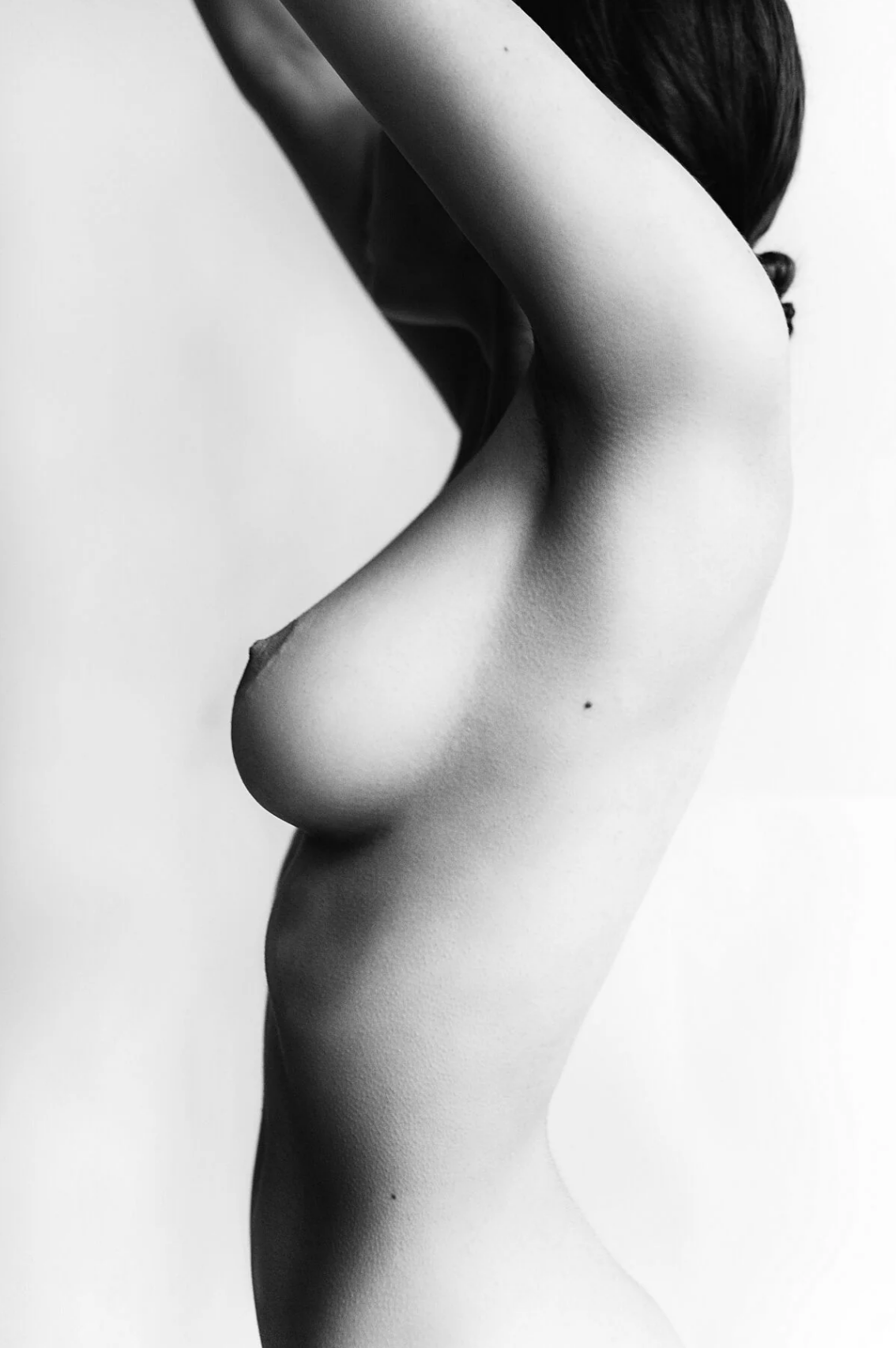
Size of breast fundamentally comes down to personal preference. I’m sorry to tell you this, but there are no shortcuts in matters of taste. On its own, separate from the whole, size is a meaningless vector for a substantive aesthetic analysis. If we must isolate one single factor, for the sake of virality, the qualitative factor most linked to the universal aesthetic of perfection in breasts is the hang.[31]
Big, small, asymmetric, tuberous, plump, flat, areolic, or not, all of these are just variables that combine into the overall aesthetic composition of the hang of the breasts. The hang is what truly matters; it is what most evokes man’s passion for the feminine breast. The hang is what counts most for the true connoisseur.
Movement And Transformation
Observe this gallery; all photographs are of the same woman with exceptionally large breasts and high aesthetic hang coefficient. See how the breasts are free to move, become unbalanced, and transform endlessly. This fluidity of the breasts satiates our innate human desire for endless change. The slightest change to her posture unlocks new feasts for the eyes. This set of photographs entices us to imagine the full range of possibilities which, thanks to exceptional hang, appear endless to us.[32]



There is an implication of delicate balance in every frame. In person, the viewer comes away with the feeling that certain views will never be seen again. The degree of arousal, the precise pose, the angle of observation, the moment in time—it is all flowing into the compositions before us; it will not last but a moment.
Everything is more beautiful because we’re doomed. You will never be lovelier than you are now. We will never be here again.
— Homer, The Iliad
The hang accounts for the living aspect of breasts; it acknowledges their effervescent nature. The possibilities stretch like the infinite universe itself, exploding outward in a torrent of expansiveness. With her arms stretched above her head, they approximate a warrior’s armor. With hands across her belly, they are transformed into symbols of nourishment. With her back to the camera, the breast peeks out and entices us to adopt a more curious posture towards her.





When she is bent over, their heft is quite literally felt within us. The same source sequence can widen into a longer study without becoming a detached demonstration; it remains part of the argument about movement.
No Less Expansive
Breast-size discourse misses the point. Observe the next pair of another model, still sizable, but with a great deal smaller breasts than the previous example. Here we see the same capacity for infinite movement and transformation. The possibilities are no less expansive in scope just because she has a smaller stature of breast. Again, her hang coefficient is magnificent.

Their movement is still capable of similar inspirations as the bustier specimen. Indeed, when we observe her on her back with hips in the air, the breasts recede a great deal into her body—a marvelous discovery that inspires intrigue and an arousing sense of confusion. It reminds us that we have limited understanding of the true mechanics of her form.[33]
Her breasts’ capacity for change is no less than that of the former model. In some of the photos, we observe a racked-up beauty; in others, her chestiness is significantly suppressed. The effect is the same: it takes our imagination on a rollercoaster ride of possibility.[34]
We do not truly understand, but we sense that all of the parts play a role in constructing the hang. The nipple’s construction, its level of arousal at the moment the shutter clicks, the mass, the unseen musculature beneath the breasts—it all comes together to form the whole. We catch glimpses of this complete architecture when we train our focus on the hang. The hang is our key to unlocking these mysteries; it is our Rosetta Stone to her form.[35]
Careful Discernment
As we move further down the stack, examples of elite hang coefficient become harder to find. In smaller-breasted specimens, pose becomes more essential for proper evaluation. Viewed from the side, we are able to spy a breast’s delicate contouring; from beneath, the underside creates enticing lines. A gallery is the instrument for that comparison, and the argument only needs a few of them in the reading itself.
The rest belong on the page without standing in the way of it. Every arrangement the grid can make is gathered below, one of each count from two frames to nine, so the whole bank can be examined at once and then closed again. This is what a fold is for: material that belongs to the piece but not to its through-line.
Every gallery size, two frames through nine
Two frames divide the field in half. This is the pair, the most common arrangement in the corpus, and the only one where each frame keeps a full half of the Main width.
Three frames divide it in thirds. This is the row, and every count above three is built from rows of three and halves.
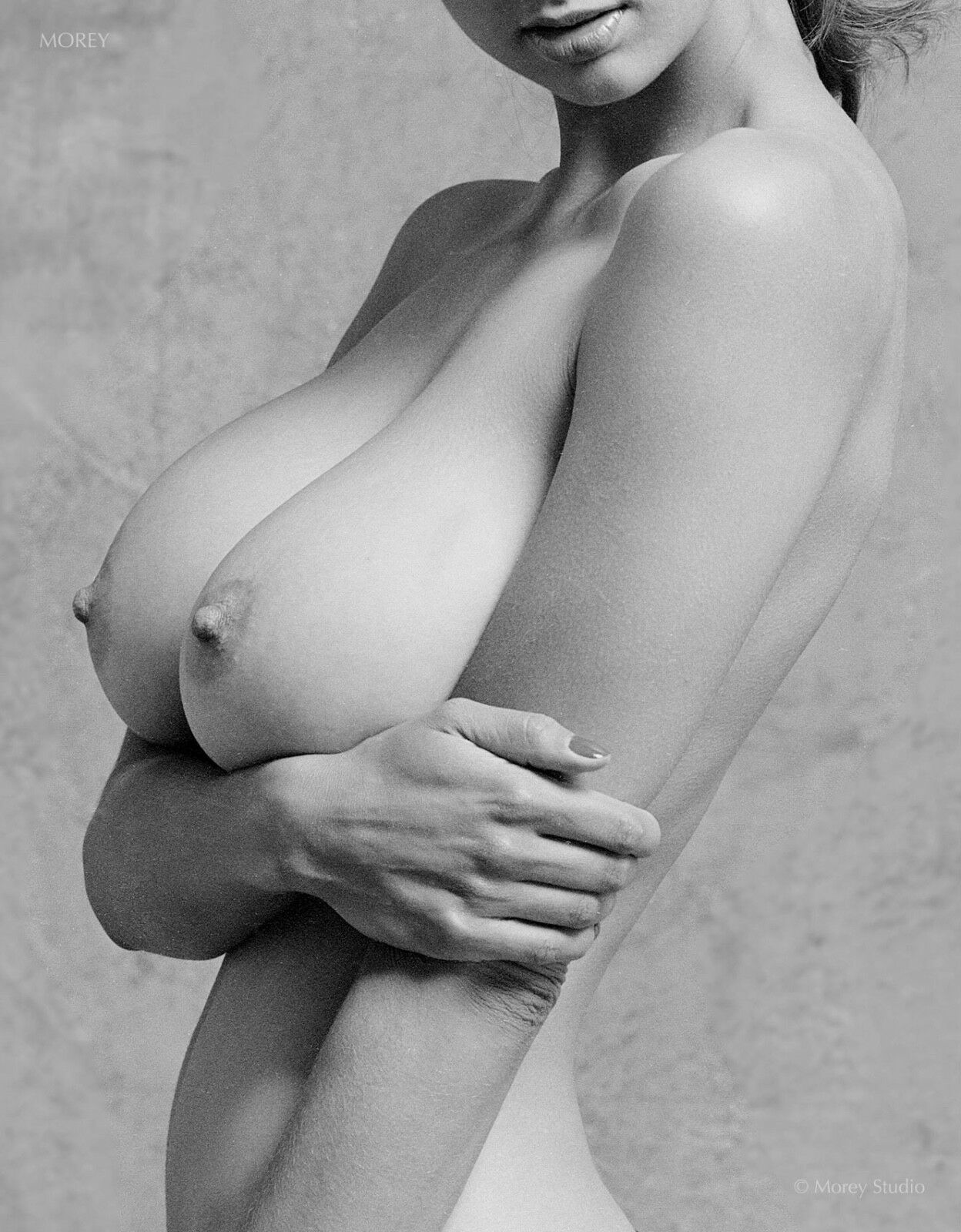
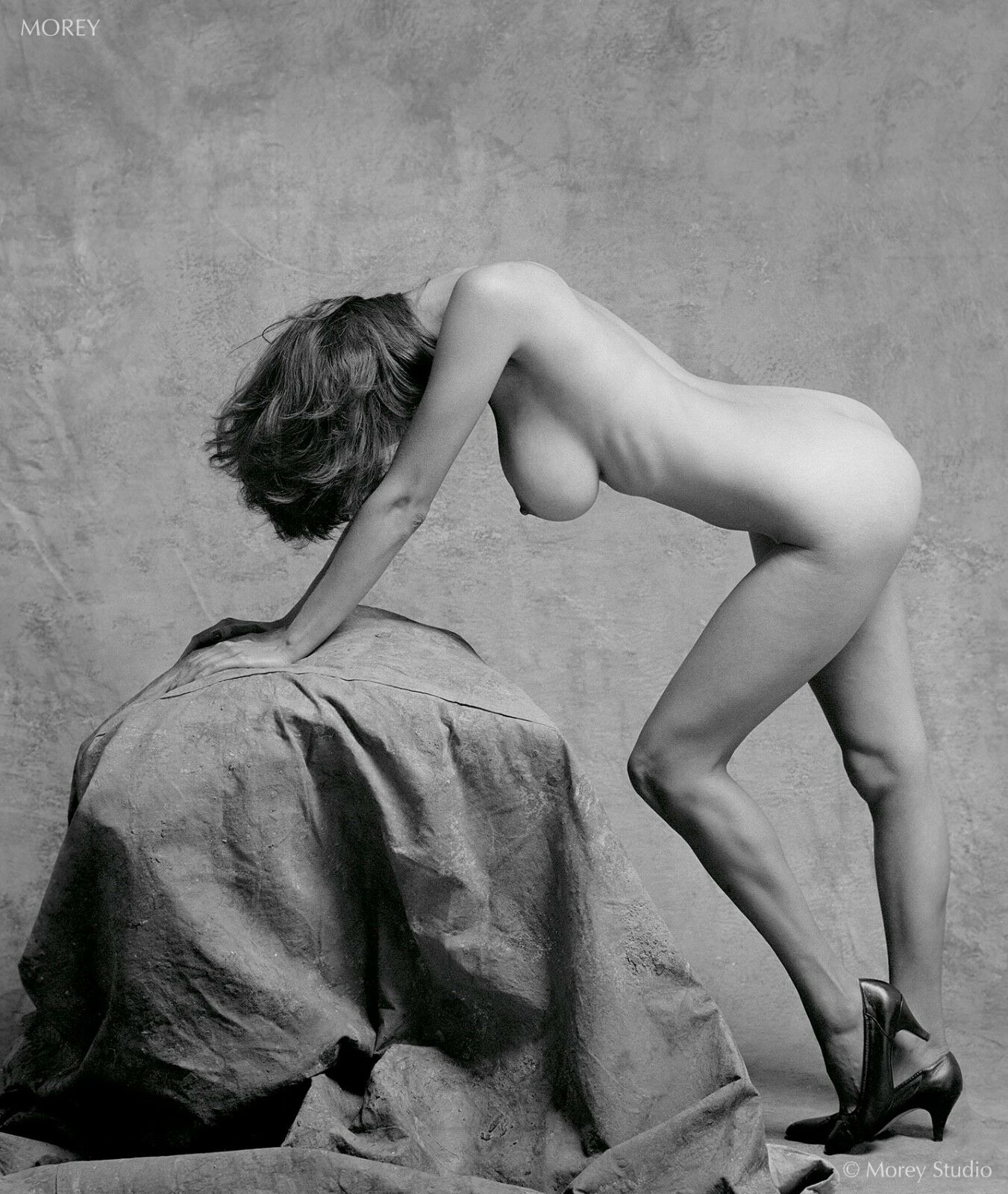
Four frames make two halves twice over, rather than a row of three with a stranded fourth.


Five frames open on a row of three and close on a pair, so the remainder is never a single frame alone at one third of the width.
Six frames are two complete rows, and the arrangement the essay uses in its own reading above.
Seven frames open on a row of three and close on two pairs.
Eight frames run two full rows and close on a pair.
Nine frames are three complete rows: the largest arrangement the grammar accepts, and the one that proves the grid holds at its widest.
Yes, as we get smaller, the hang is less severe overall, but its effect is still totally present, just as complete as in the others. There is less dynamic range required to achieve the same effects as in the bustier women. The capacity for alluring movement is still there; the possibility of transformation is no less present due to the smaller size—they just require more careful discernment from us.
Suboptimal Hang
Here are two examples of poor hang coefficient in otherwise stunning specimens. Perhaps these counterexamples will help you to more fully understand the hang.


Remember, a photo captures a moment in time, so some of these subjects are indeed capable of poses that bring them nearer to optimal hang. But these particular photos capture suboptimal hang and are presented for the purposes of learning. Of course, there are also many examples of too much hang, incorrect hang, and related departures. Today’s piece is about what makes the perfect breasts, not what does not.
Movements That Move Us
The hang is about a capacity for movement, a boundlessness, a potential for energy. It is about the infinite possibility for transformation; it stuns us into a sense of wonder as we contemplate the sheer scale of what has been, what is right now, and what could be.
The hang…
The hang…
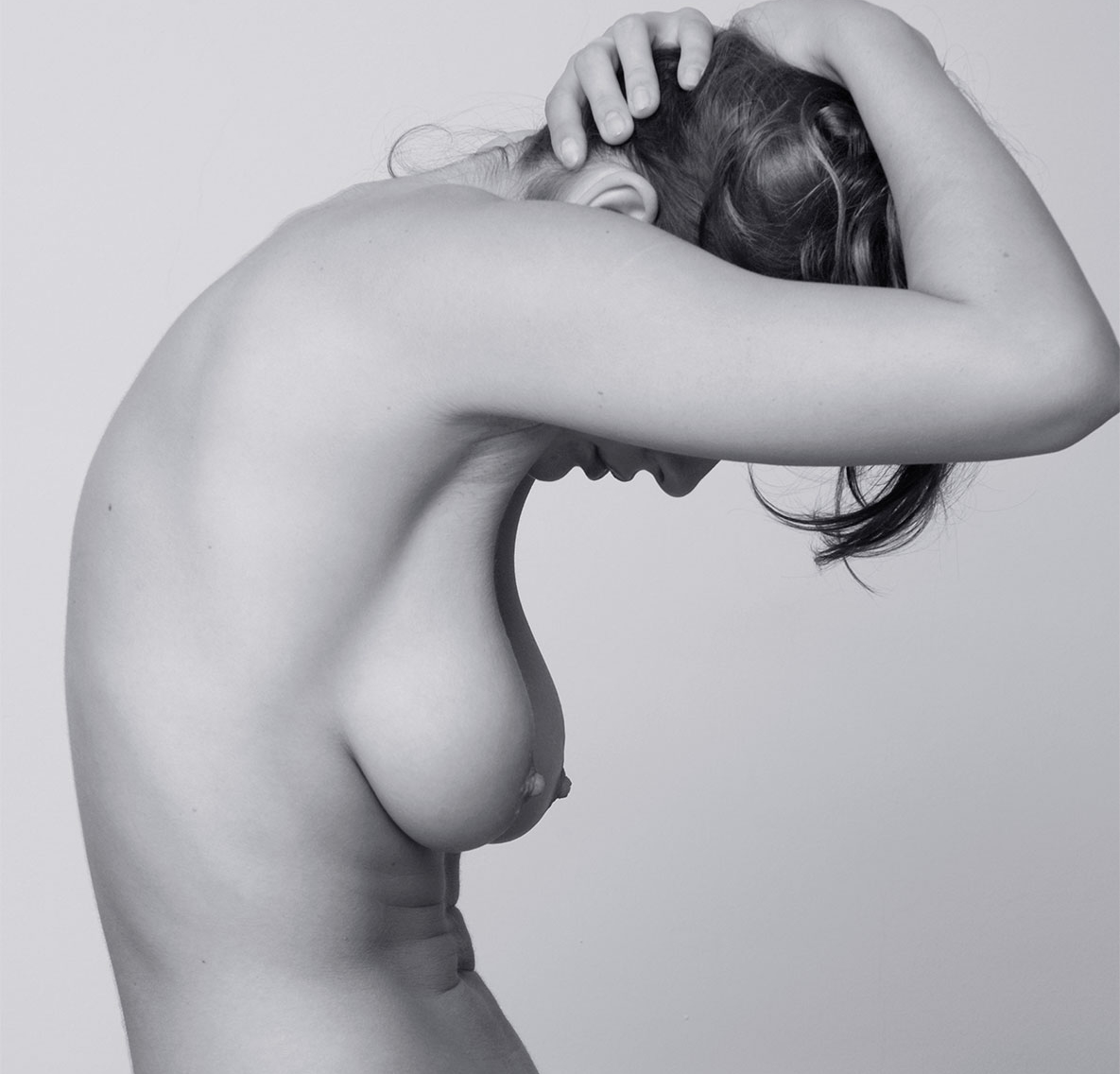
…makes the beauty of breasts infinite; it unlocks a world in which anything is possible. The hang reminds us that without movement there is no life, and that is precisely why the hang moves us so.
Tables and editorial structures
Tables belong to arguments. Article identity comes from its record, body from Markdown, and matters from Atlas filing. The first table describes the three nested width roles; it is compact enough to reveal whether a wide-capable component still looks composed when its data are slight.[36]
| Role | Maximum | Default material | Author override |
|---|---|---|---|
| Prose | 42rem | Paragraphs and headings | Images only |
| Media | 48rem | Single figures | Yes |
| Wide | Main | Galleries, code, tables, notes | Yes |
Three practical rules are enough to author within the system:
- write the Article as ordinary Markdown beginning at H2;
- place
@[width](prose|media|wide)only before an image or gallery; - allow the compiler to generate classes, contents, notes, and endmatter.
The publication sequence is equally short:
- Author the record and Markdown.
- Compile the Article through the shared kit.
- Verify the rendered page before release.
The machine-readable form of the same idea tests a fenced block without turning the entire Article into documentation:
article:
  frame: atlas
  surface: atlas
  normalization: normalized
  widths:
    prose: 42rem
    media: 48rem
    wide: main
A research ledger requires horizontal overflow on narrow screens while preserving relationships among many columns.[37]
| Order | Symbol | Domain | Estimate | Lower | Upper | Status | Interpretation |
|---|---|---|---|---|---|---|---|
| 0 | Lattice | 0.0000 | 0.0000 | 0.0000 | Fixed | Normalization | |
| 1 | Real | 0.3631 | 0.3510 | 0.3752 | Estimated | First moment | |
| 2 | Real | 0.6959 | 0.6820 | 0.7098 | Estimated | Second moment | |
| 3 | Lattice | 1.0000 | 1.0000 | 1.0000 | Fixed | Conservation | |
| 4 | Real | 1.2797 | 1.2621 | 1.2973 | Estimated | Intermittency | |
| 5 | Real | 1.5380 | 1.5164 | 1.5596 | Estimated | Tail behavior |
Code may interrupt the same discussion and then return control to prose:
const articleLaw = Object.freeze({
  header: "article-frame",
  body: ["prose", "media", "wide"],
  endmatter: "article-frame",
});
A dense numeric matrix exists to pressure both dimensions of the table wrapper:
| A | B | C | D | E | F | G | H | I |
|---|---|---|---|---|---|---|---|---|
| 1 | 2 | 3 | 4 | 5 | 6 | 7 | 8 | 9 |
| 2 | 4 | 6 | 8 | 10 | 12 | 14 | 16 | 18 |
| 3 | 6 | 9 | 12 | 15 | 18 | 21 | 24 | 27 |
| 4 | 8 | 12 | 16 | 20 | 24 | 28 | 32 | 36 |
| 5 | 10 | 15 | 20 | 25 | 30 | 35 | 40 | 45 |
| 6 | 12 | 18 | 24 | 30 | 36 | 42 | 48 | 54 |
| 7 | 14 | 21 | 28 | 35 | 42 | 49 | 56 | 63 |
| 8 | 16 | 24 | 32 | 40 | 48 | 56 | 64 | 72 |
| 9 | 18 | 27 | 36 | 45 | 54 | 63 | 72 | 81 |
Its mathematical analogue checks dense display alignment:
The final table uses long prose instead of many columns. It asks cells to wrap internally without allowing one token to resize the whole document.[38]
| Case | What the reader sees | What the layout must do |
|---|---|---|
| Short prose | A few words with no unusual pressure. | Preserve the normal hierarchy. |
| Long prose | A complete sentence that occupies several lines on a narrow viewport. | Keep each row intelligible while allowing the wrapper to scroll. |
| Unbroken token | hierarchical-symmetry-classification-uniqueness-stability |
Prevent document-level overflow. |
| External address | https://example.com/a/deliberately/long/path/that/keeps/going |
Wrap or scroll without escaping the page edge. |
One last code block carries an intentionally long line. The scrollbar belongs to the code block, never to the page:
ARTICLE_KIT=header→audio→contents→source-extracts→prose→figures→galleries-2-through-9→tables→math→code→youtube→x→forty-notes→endmatter
Media correspondence
Third-party media should enter the reading flow as cited correspondence, not as a foreign application mounted inside the page. The Article owns the title, caption, source route, and surrounding argument even when the provider is blocked or delayed.[39]
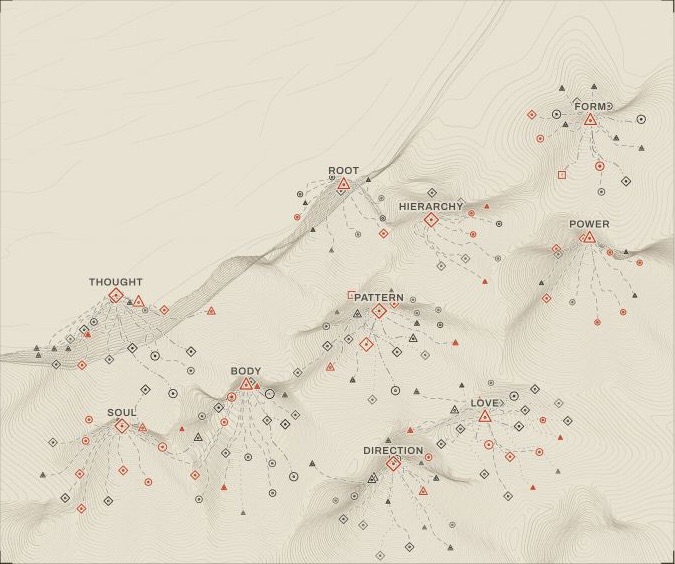
The YouTube specimen uses the prose measure and a cinematic ratio:
A moving-image explanation can carry intuition that notation alone does not. The paragraph after the player is deliberate: it restores the house voice before the next provider arrives.
The X specimen has a different natural shape and must not acquire a redundant border around the provider’s own card:
The source link remains useful when the embedded card cannot load. Accessibility and citation do not depend upon successful third-party rendering.[40]
Omitting the directive restores the default, and the next figure proves it: the same card, no directive above it, sitting at the single-image measure the renderer would have chosen on its own.
A medium does not merely carry thought. It enters the conditions under which thought can be encountered.
The Article therefore treats each medium as part of one reading surface, while preserving the medium’s own necessary behavior.
The kit ends as an Article should: in prose. The notes below remain deliberately large because multi-digit markers, long references, backlinks, and a wide notes field are not edge cases in serious work.
Notes
The kit is the canonical visual-regression body for the shared Article presentation. ↩︎
Both header variants compile this source, and their rendered bodies must remain byte-identical. ↩︎
The abstract is adapted from Hierarchical Symmetry Selects Log-Poisson Cascades: Classification, Uniqueness, and Stability. ↩︎
Structure functions connect observable scaling to the moment structure of the cascade multiplier. ↩︎
The historical sequence moves from physical proposal to mathematical characterization. ↩︎
The four claims test emphasis, inline notation, and a long enumerative paragraph without using a list. ↩︎
Compactification and moment determinacy are the central proof mechanisms in the source paper. ↩︎
Conservation of mean is a normalization convention rather than a dependency of every theorem. ↩︎
The relationship is the bridge between one-step moments and scaling exponents. ↩︎
The free constant and true limiting increment coincide in the exact theory but differ in the fitted stability problem. ↩︎
The deterministic edge case separates monofractal scaling from nontrivial intermittency. ↩︎
The exponent formula begins as a consequence of a linear recurrence. ↩︎
The aligned proof display tests multiple rows, operators, fractions, and a final punctuation mark. ↩︎
The Poisson parameters are written entirely in terms of observable exponent data. ↩︎
Compact support converts the lattice moment problem into the Hausdorff moment problem. ↩︎
The theorem characterizes the multiplier without an infinite-divisibility assumption. ↩︎
The singularity spectrum combines a bounded domain, logarithm, fraction, and multiline alignment. ↩︎
The singularity spectrum tests a bounded domain, logarithm, fraction, and multiline alignment. ↩︎
The codimension also has a direct interpretation in terms of repeatedly attaining the maximal multiplier. ↩︎
This is the opening thesis of Cannot Read-Only. ↩︎
The pottery wheel is the governing metaphor of the source essay. ↩︎
The hands, clay, and wheel identify the conscious being, accumulated experience, and time. ↩︎
The functionalist and biological-naturalist divide supplies the essay’s historical problem. ↩︎
Mortal computation makes learned knowledge inseparable from the physical system that learned it. ↩︎
Informational separability is useful engineering, but it may also be the architectural difference at issue. ↩︎
Continual learning requires processing to alter the system doing the processing. ↩︎
Hoel treats frozen weights during inference as an architectural limit rather than a scaling problem. ↩︎
The Kleiner result carries computational functionalism toward substrate-inseparable computation. ↩︎
The five programs converge without making identical claims. ↩︎
The Hang begins by refusing a one-variable theory of taste. ↩︎
Its central claim treats hang as a compositional and dynamic quality rather than a measurement. ↩︎
The source galleries study transformation across posture, viewpoint, and time. ↩︎
Six images form two complete three-image rows. ↩︎
The second source movement emphasizes that reduced scale does not eliminate dynamic range. ↩︎
Careful discernment turns still photographs into evidence of motion beyond the frame. ↩︎
A compact width table tests whether a wide-capable primitive remains visually proportionate. ↩︎
The research ledger adapts notation and values from the hierarchical-symmetry paper. ↩︎
Long cells, URLs, and unbroken tokens exercise wrapping and local overflow. ↩︎
The house remains responsible for meaning when an embed provider fails. ↩︎
Forty distributed references produce a genuinely large notes field with multi-digit markers and backlinks. ↩︎